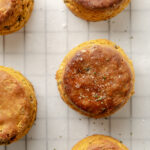
Gluten-Free Pumpkin Biscuits with Sage and Rosemary
Celebrate fall with these buttery flaky gluten-free pumpkin biscuits. Made with brown butter and fresh herbs, these biscuits are packed full of so much flavor, perfect for Thanksgiving!
Servings 6
Calories 391kcal
Equipment
- 1 Food Processor optional
Ingredients
- 8 tablespoons unsalted butter, browned
- 2 tablespoons fresh sage, finely chopped
- 1 teaspoon fresh rosemary, finely chopped
- 2 cups (272g) gluten-free flour, Bob's Red Mill Gluten-Free 1 to 1 Baking Flour
- ¼ cup (25g) almond flour
- 1 tablespoon baking powder
- ½ teaspoon baking soda
- 1 teaspoon garlic powder
- 1 teaspoon salt
- ½ cup (120g) pumpkin purée
- ½ cup (120ml) buttermilk, plus additional for brushing
- 3 tablespoons (63g) honey
Instructions
- Brown the butter. Place the butter in a medium-sized pan over medium heat. As the butter melts it will start to foam, stir the butter with a rubber spatula. The milk solids will begin to turn a golden brown color while omitting a nutty aroma. Once the butter is fully browned remove the pan from the heat. Pour the butter into a heatproof glass bowl.
- Add the fresh herbs. Add the chopped sage and rosemary to browned butter and stir. The herbs contain moisture which can create a bit of foam in the butter. Let the herbs infuse into the butter for 5 minutes. Then cover the bowl with a lid and place it into the freezer for 1 hour.
- Prepare the frozen butter. Remove the butter from the freezer. It may need a few minutes to rest at room temperature before you can scoop it out of the bowl. Using a spoon, carefully carve around the rim of the bowl and scoop out the butter onto a cutting board. Chop the butter into small pieces and set aside.
- Add the cold butter to the dry ingredients. In the bowl of a food processor, pulse the gluten-free flour, almond flour, baking powder, baking soda, salt, and garlic powder until combined. Add the chopped browned butter pieces to the processor, and pulse until the butter resembles small peas and the mixture is crumbly. Transfer the mixture to a large mixing bowl. If you do not have a food processor, whisk the dry ingredients together in a large bowl, and cut the butter into the flour mixture with a pastry cutter, grater, or fork until small pea-sized crumbles form.
- Add the wet ingredients to the dry ingredients. In a medium-sized bowl whisk together the pumpkin puree, buttermilk, and honey until smooth. Pour the pumpkin mixture into the dry ingredients and stir with a rubber spatula. The dough will appear dry, but the more you stir, it will eventually form into a shaggy-looking ball with flour bits at the bottom of the bowl.
- Bring the dough together. Turn the dough out onto a lightly floured work surface. With lightly floured hands work the dough together, and pat the dough into a 1-inch thick rectangle.
- Fold, cut, and stack the dough. Starting at the bottom of the rectangle, lift and fold the dough in half. Then cut the dough in half lengthwise and stack the two halves on top of each other. This will help create flaky layers. Pat the dough back into a rectangle. Add more flour underneath the dough if it starts to stick to the surface. Repeat folding, cutting, stacking, and patting 3 more times, moving the dough around the surface and adding flour underneath as needed.
- Cut out the biscuits. Roll the finished dough into a rectangle about ¾ to 1-inch thickness and cut out 3 biscuits using a 2½ to 3-inch round floured cookie cutter. This is a sticky dough, so it helps to clean and re-flour the cookie cutter between each biscuit cut. Gather the scraps of dough, and re-roll into another rectangle, this time cutting out 2 biscuits. Roll the dough one last time cutting out the final biscuit. You should have 6-8 biscuits depending on how thin you rolled the dough. Place the biscuits onto a parchment-lined baking sheet and into the freezer for 20 minutes. Preheat oven to 425°F while the biscuits are chilling.
- Bake the biscuits. Remove the baking sheet from the freezer. Brush the tops of the biscuits with a little buttermilk. Place the baking sheet into the oven to bake for 24-26 minutes or until golden brown and cooked through. Baking time depends on how thick you have rolled the dough. If your dough is thinner than 1" inch reduce the baking time to 18-22 minutes or until golden brown. Once the biscuits are fully cooked, remove them from the oven and brush the tops with melted butter. Transfer to a cooling rack for ten minutes before serving.
Notes
- Storage: Freshly baked biscuits are best served the same day they are made, but you can store any leftovers in an airtight container at room temperature for 2-3 days.
- Freezing: After cutting the biscuits, place them on a parchment-lined baking sheet and cover them with plastic wrap. Make sure the biscuits aren't touching each other, or they might freeze together. Freeze for several hours then transfer to a freezer bag or airtight container, with parchment paper in between each biscuit.
Nutrition
Calories: 391kcal | Carbohydrates: 43g | Protein: 6g | Fat: 20g | Saturated Fat: 10g | Polyunsaturated Fat: 1g | Monounsaturated Fat: 4g | Trans Fat: 1g | Cholesterol: 42mg | Sodium: 623mg | Potassium: 296mg | Fiber: 5g | Sugar: 12g | Vitamin A: 3677IU | Vitamin C: 1mg | Calcium: 170mg | Iron: 2mg